Process
Our buildings emerge from a rich and ongoing dialogue with our clients. The design process is personal, inclusive, and collaborative.
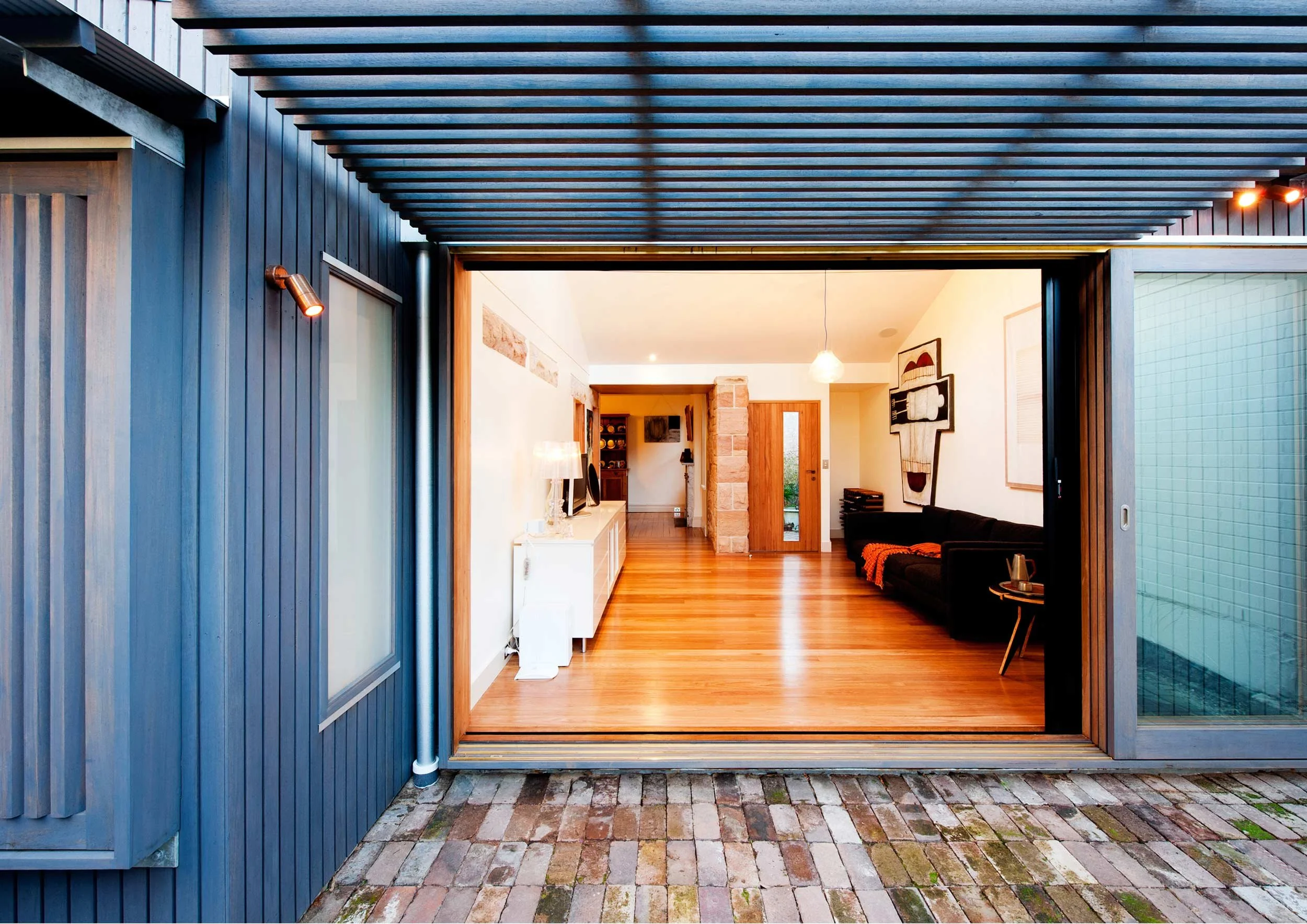
“Eoghan’s easy-going collaborative approach and his ability to come up with creative and cost-effective solutions to the myriad problems which inevitably arise when renovating a century-old building made the whole experience an exciting and enjoyable one. I would not hesitate to recommend Eoghan Lewis Architects to anyone seeking a truly creative, environmentally sensitive and ecologically smart design team.”
The Beginning
Most projects begin in a similar way.
A brief often arrives in the form of a list — rooms, budgets, constraints. This is perfectly normal. As we get to know more about our clients, what they value and what success for looks like for them, the brief becomes more nuanced and in turn, the questions we ask become sharper. Expectations are aligned. Some clients don’t want the romance, they just want the project delivered under a set of very clear equations. Bringing the romance to an unromantic project is one of our biggest challenges.
Trust
We don’t ascribe to a particular style or set of ready-made solutions — which disappoints some.
What we bring to each project is our experience, our creativity and an intense curiosity - about our clients, their project, the site. Not much is clear at the beginning, and not every path leads somewhere useful. Many ideas lead to dead ends while others may unexpectedly open up delightful new possibilities. It’s exhilarating and frightening at the same time — for us and also for our clients! Trust is essential.
As projects develop and parameters emerge, the path becomes clearer. Design directions are interrogated and discussed before moving forwards. The process is linear in a zig-zaggy kind’a way.
Start with the Garden
Rather than landscape being a tack-on or after thought, we prioritise gardens and consider them to be as important as rooms — outdoor rooms. The relationship between indoor and outdoor spaces is key.
Designing the house around garden spaces gives adjacent rooms the opportunity to bring nature in. This allows the architecture to reduce, to simplify and be calm. And when we say nature, we don’t just mean leaves and rocks and trees, we mean any place that sunlight is invited into or wind blows or any place where leaves can fall. On a tight city block a beautifully framed piece of sky may be all we can bring into the building, and this can also be considered a kind of garden threshold.
Relationships
Developing efficient, beautiful relationships is key. Between inside and outside. Between one room and another. Between light and shadow. Between old and new. Between a building and the street.
We pay particular attention to thresholds—those moments where conditions shift. A step, a door, a change in material, a line of shade. The places where private becomes public, where wet becomes dry. Those moments in a building where the outside is invited in. These are often the places where buildings are most felt.
We often layer up our window and door thresholds with screens that operate independently. Glazing keeps the outside outside. A second skin might have a flyscreen and batten screen that responds to summer sun or a privacy issue. Richard Leplastrier taught us that ‘live’, as in ‘to live’, is a verb. It describes an action or state of being. It is not static. We like that our buildings are ‘worn’ and our clients can adjust them to particular conditions, needs or whims.

“The house encourages you to sit and contemplate, to be still and connect to the land. It invites you to that serene, calm place when you forget about the outside world.. it’s heaven for us.”
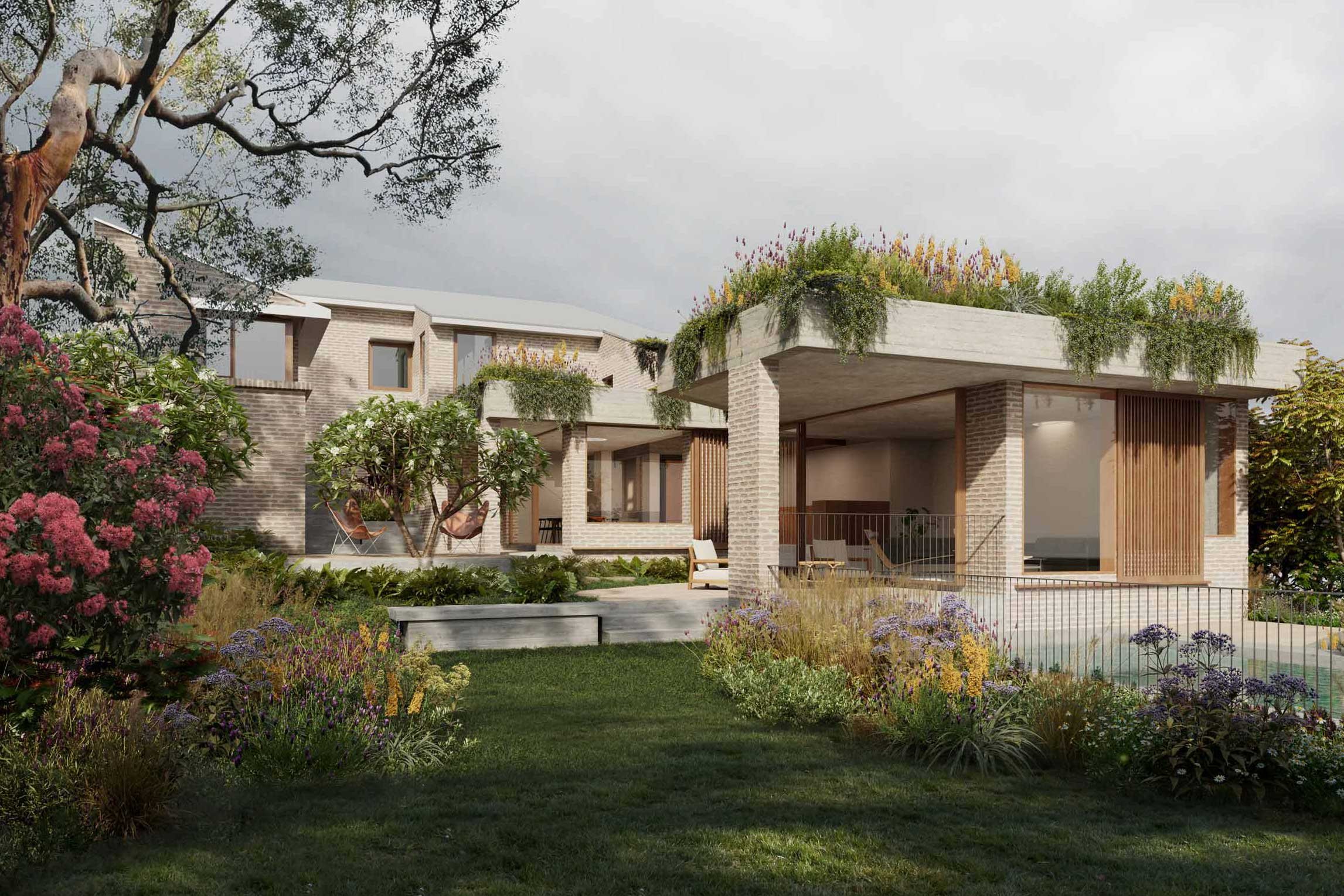
Garden House Marrickville is informed by context, landscape and topography. The roof is a wild, native garden set out at the upper floor level. Additions cascade down the site, each level informed by topography, each living space opening directly onto new garden spaces. The building steps back to the southern boundary maximising winter sun penetration and focusing attention on a verdant garden - imagined as a kind of family square or piazza. The natural pool is filtered by aquatic plants.
Performance
We care deeply about how our buildings perform: how they respond to summer and winter sunshine, how they catch a key breeze, how they hold warmth, how they weather over time, how they breathe. Our aim is simple — to make buildings that are comfortable year-round, weather slowly and beautifully with minimal reliance on active heating or cooling systems.
These ideas are fleshed out in Sustainability.
Simplicity
Building is complicated. Councils, construction costs, existing building idiosyncrasies, topography, underground services, a big tree in the wrong place, shitty extensions done by previous owners, noisy neighbours!
Every project is its own unique puzzle that needs to be cracked, and if we do our job well, we resolve complexity with thoughtful, measured solutions. If a scheme is becoming more complicated then we need to work harder!
Simplicity has aesthetic and practical consequences — like fewer and more robust materials, simpler construction, logical forms and better value for our clients. It means simple systems, straightforward and effective communication with our clients, with Authorities and builders. And it means buildings that are more direct, uncompromising and easier to build. This is one of the lessons Utzon taught us. Do simple things well.
Another way of thinking about simplicity architecturally is clarity. We want our buildings to be easily understood. We want them to work in harmony with their surroundings. We want our buildings to confidently know where they are and what they are. The clothes have got to fit — or as we like to say on our tours — dress for the weather!
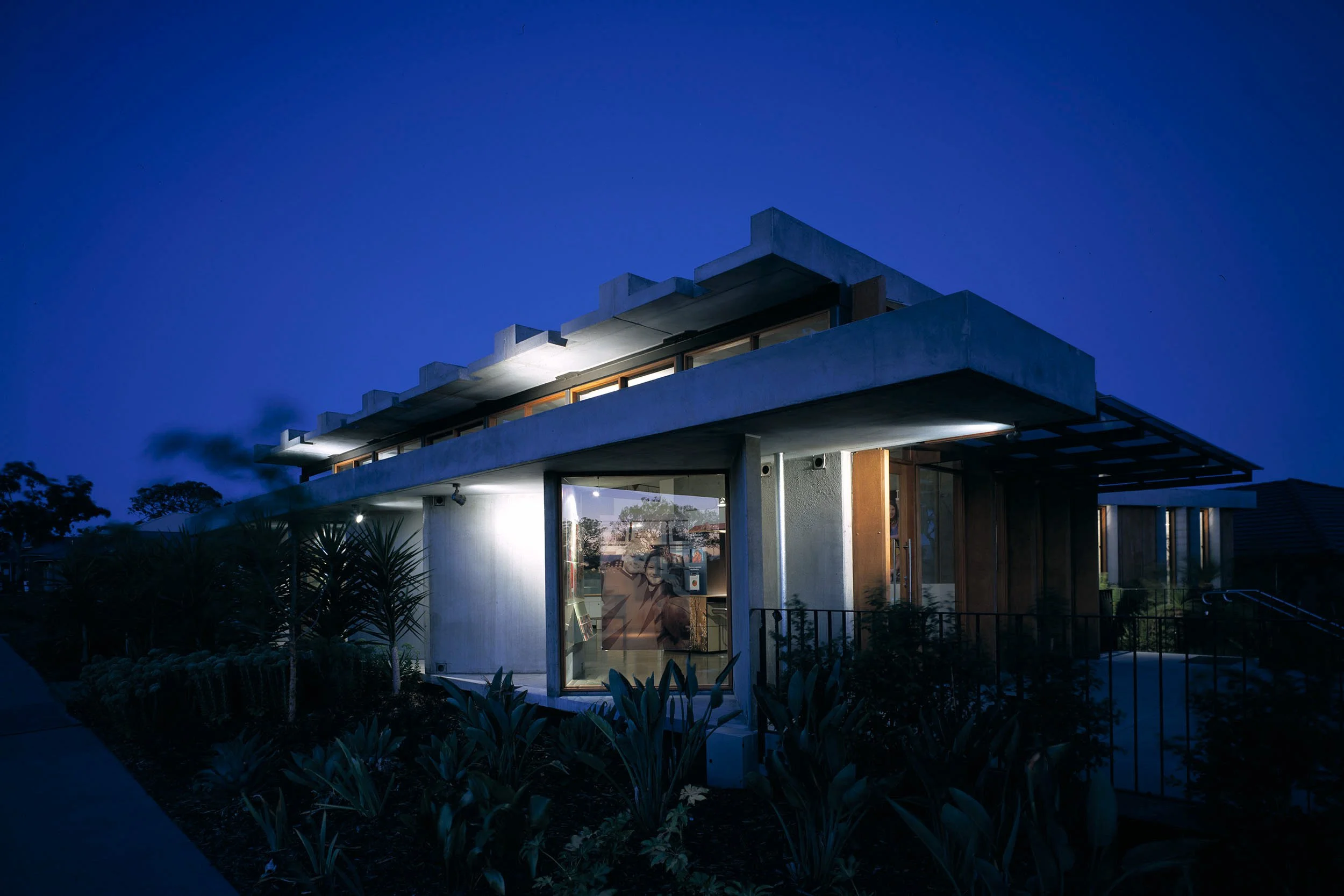
Public: Eco Prefab
“The key to the project was its simplicity. Eoghan responded to our Brief in a direct and assertive way so the building took shape very quickly and captured the imagination of key stakeholders, decision makers and authorities”
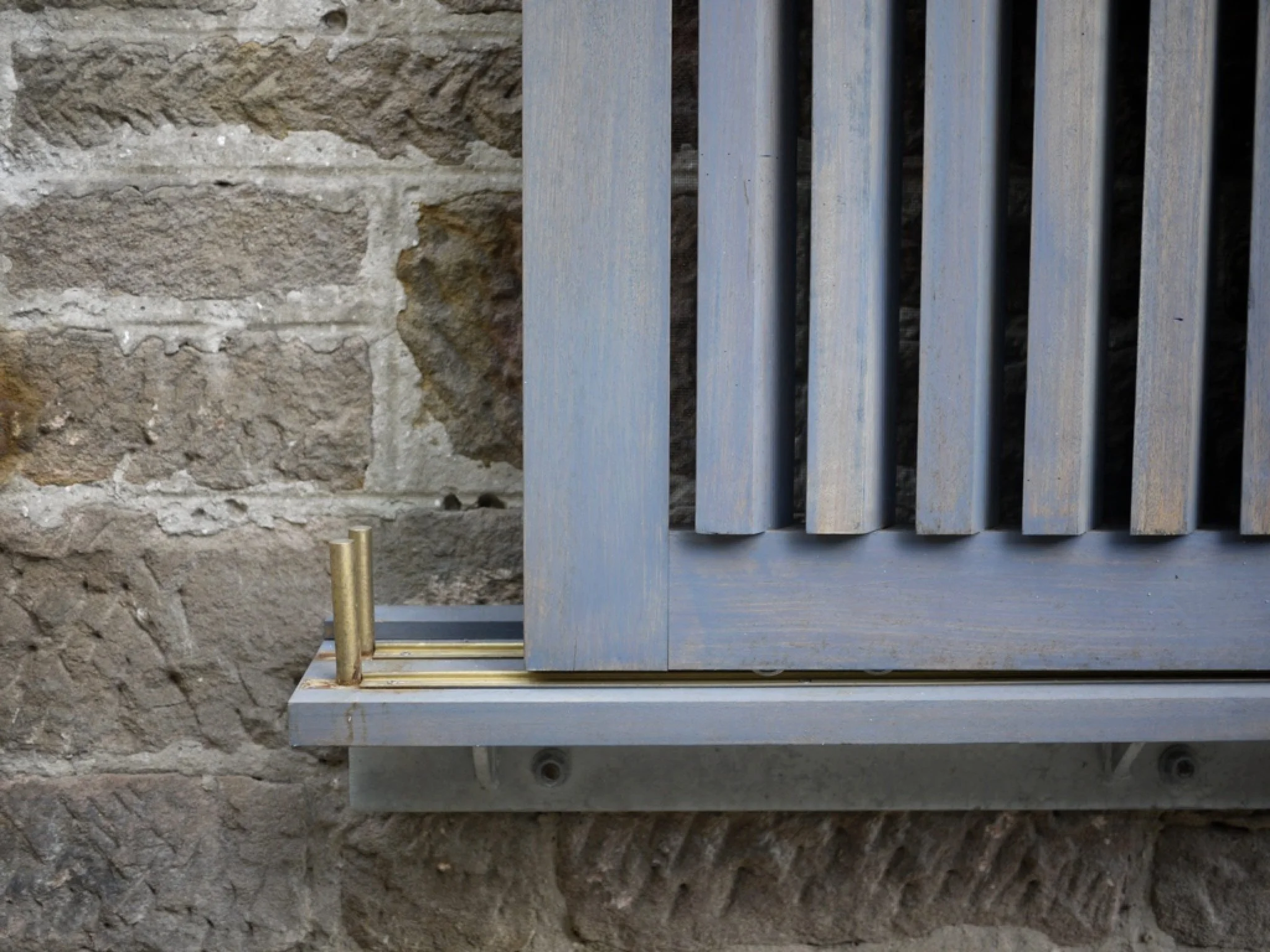
A small hardwood and corrugated iron addition stitched onto a 19thC sandstone cottage.
House: Tempe
Materiality and Craft
We’re interested in the stuff of architecture — what our buildings are made from and how they’re put together.
We’re often drawn to humble, hard-working, locally sourced materials such as hardwood and hardwood plywood, raw brass, clay bricks and lime wash paint. The most important question for us is which materials can do each task the best, and how do they perform over time. We try to understand the unique qualities of each material, work with those qualities, and consider how they all come together in a beautiful way.
Timber for example, is warm and tactile, but asks to be handled with care - particularly when exposed to the weather. Steel brings an altogether different set of qualities to the table. Steel loves paint for obvious reason, particularly near the coast, whereas copper and brass oxidise very slowly and become more beautiful over time. We like to work with materials on their own terms and delight in the practical and poetic qualities they bring to a project.
We enjoy playing materials against one another. The warmth of timber contrasts beautifully with the coolness of concrete. The considered roughness of recycled bricks and mortar against the silky smoothness of steel. In this way materials are considered to be members of a family, each with their own specific attributes, personalities and roles. And like members of a family, don’t we want each member to shine and express themselves in an authentic way, enjoy the work they are doing and age beautifully over time?
More on the performance and sustainable dimension of materials here.
Enjoyment
There is a particular kind of exhilaration in seeing ideas take shape—especially when we end up somewhere unexpected. There are moments of pressure of course, but when the work is approached with care and with joy, it turns out well - every time!
We enjoy what we do, and we want our clients to enjoy the process too.
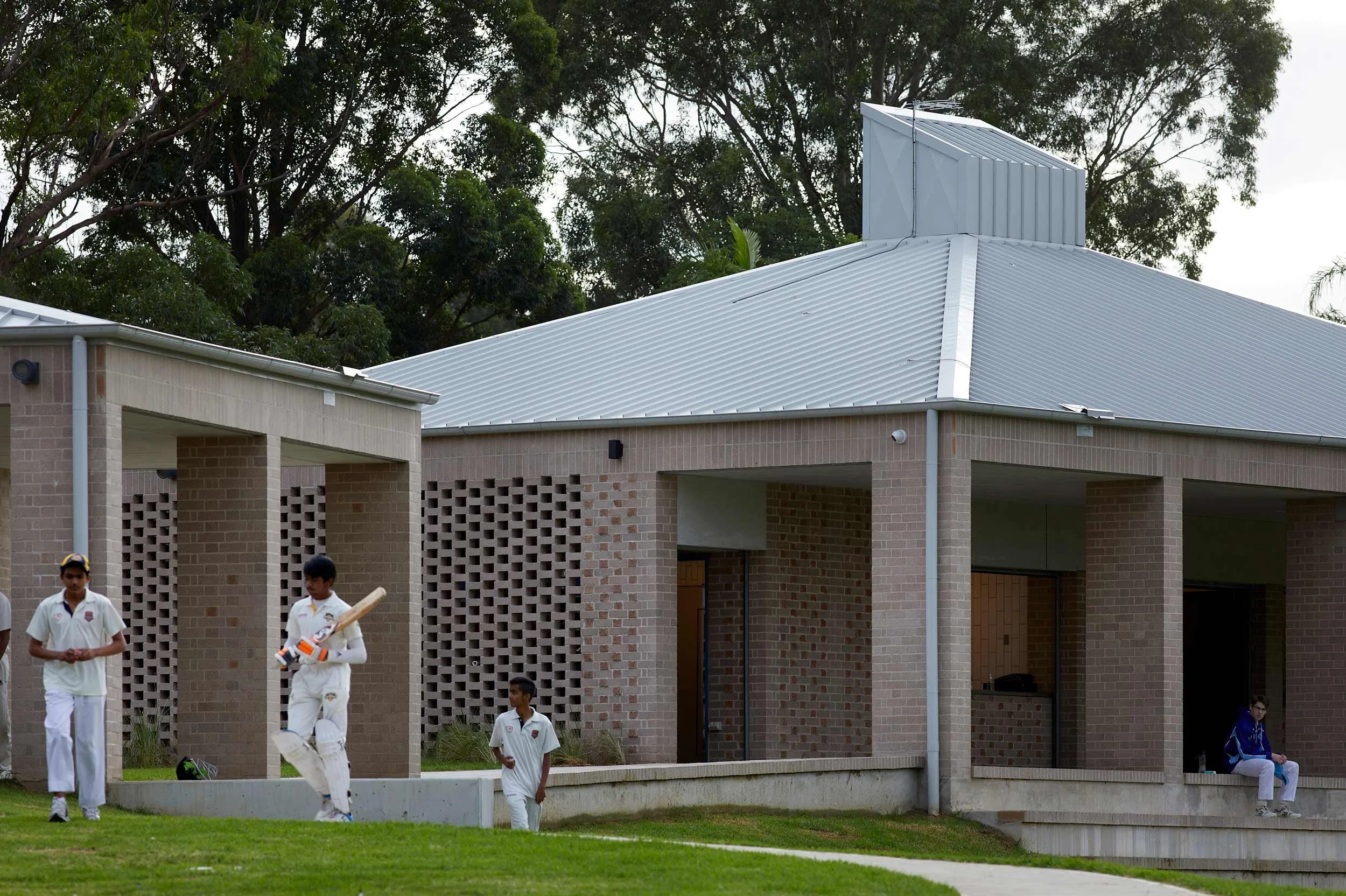
“The tranquillity of the Kings Langley Cricket Club and Amenities is a delightful contribution to its community. Restrained, hardworking, humble and referencing its suburban Blacktown materiality and typology, the project makes no grand statements, but provides a beautifully crafted community building.”